


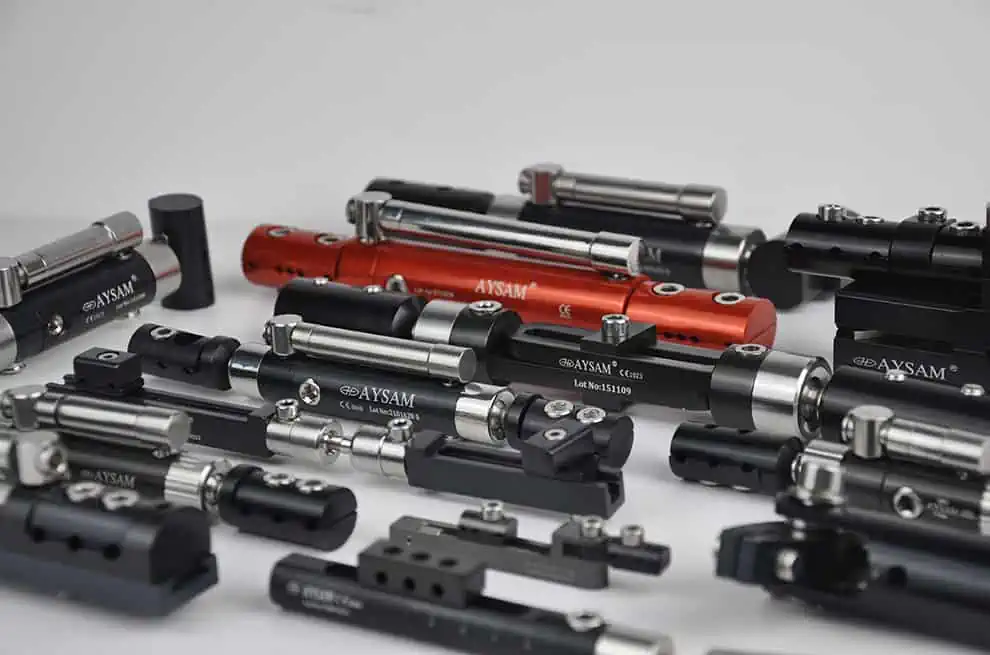
How long an external fixator stays in place can vary depending on many factors and differs from patient to patient. This is usually based on the physician’s assessment of the patient’s specific condition. However, some general factors that determine how long an external fixator stays in place are:
- Type of Fracture: The type of fracture (open, closed, comminuted) affects the treatment process. Comminuted or multiple fractures may take longer to treat. In open fractures, once infection is under control and soft tissue healing has been achieved, the external fixator can be removed after a short time and replaced by internal fixation.
- Rate of Bone Healing: Each individual’s rate of bone healing is different. While young and healthy individuals usually heal faster, age, general health and other factors can affect healing time. In open fractures, especially where soft tissue damage is extensive, bone healing may be delayed. In this case, the external fixator may remain in the body longer.
- Complications: Complications that may affect the healing process;
- Polytrauma patients,
- Unconscious intensive care patients,
- Infections at the fracture site
or other problems may require the external fixator to remain in place longer.
4- Type of Surgical Intervention: External fixators used in surgical interventions for bone lengthening or deformity correction stay in the body longer, whereas external fixators used temporarily in open fractures to stabilize bones for infection control may stay in the body for a shorter time. The purpose of the surgical intervention affects how long the external fixator stays in the body.
- Physician’s Preferences: The treatment plan is determined according to the patient’s particular circumstances and the characteristics of the fractures. The physician’s treatment preferences are an important factor in determining how long the external fixator should stay in place.
External fixators are generally removed once the bone healing process is complete, at a time the physician deems appropriate. The healing process can usually last from a few weeks to a few months. After the external fixator is removed, the patient can begin physical therapy and rehabilitation. This process can help the patient regain function and return to normal activities. However, it may vary depending on the individual situation and the characteristics of the fracture.