


Sterilizing surgical instruments is a crucial process for preventing infections and ensuring patient safety. The common steps and methods for sterilizing surgical instruments are described in detail below:
Steps Before Sterilization
- Pre-cleaning:
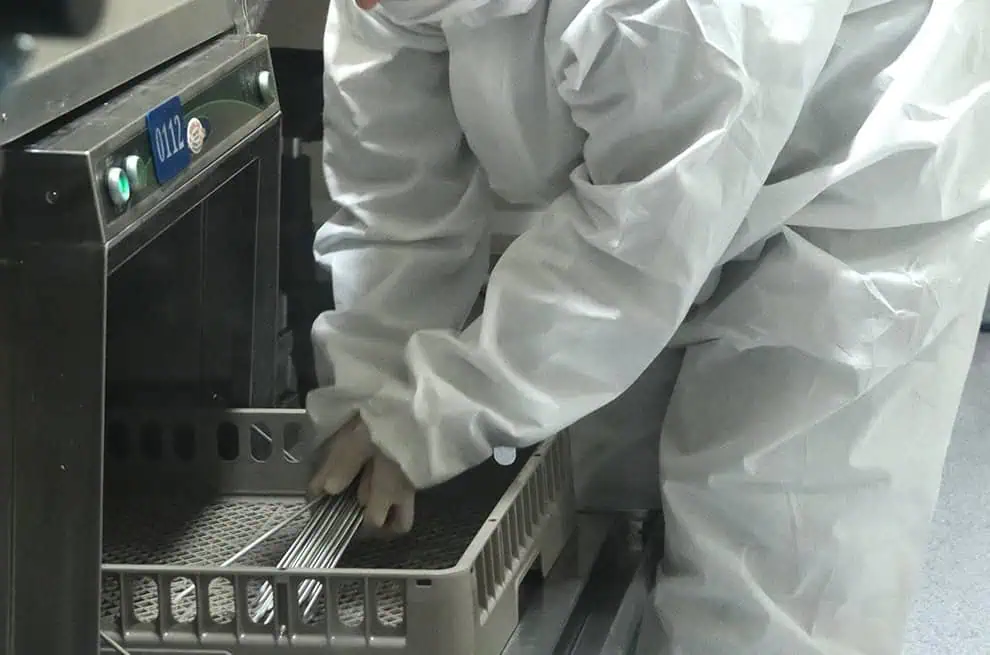
- Decontamination: Instruments must be thoroughly cleaned to remove blood, tissue and other organic residues. This can be done by manual washing or with ultrasonic washers.
- Rinsing: After cleaning, instruments should be rinsed with water to remove any detergent or cleaning agent residues.
- Inspection:
- Damage Check: Each instrument should be inspected for damage, corrosion or wear that could compromise its function or integrity.
- Function Check: Instruments with moving parts should be checked to make sure they work properly.
- Packaging:
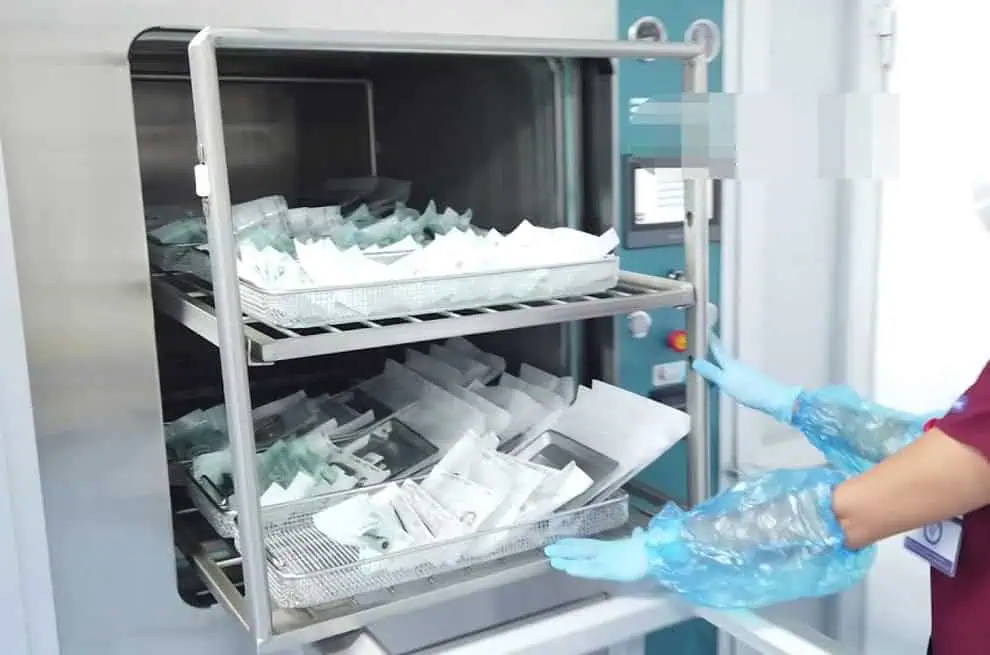
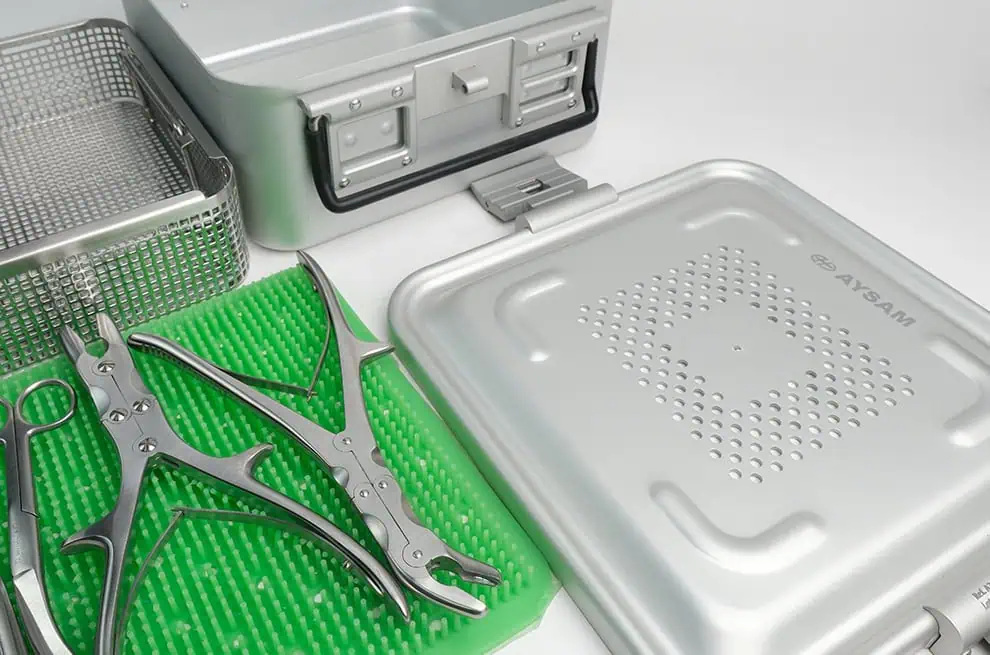
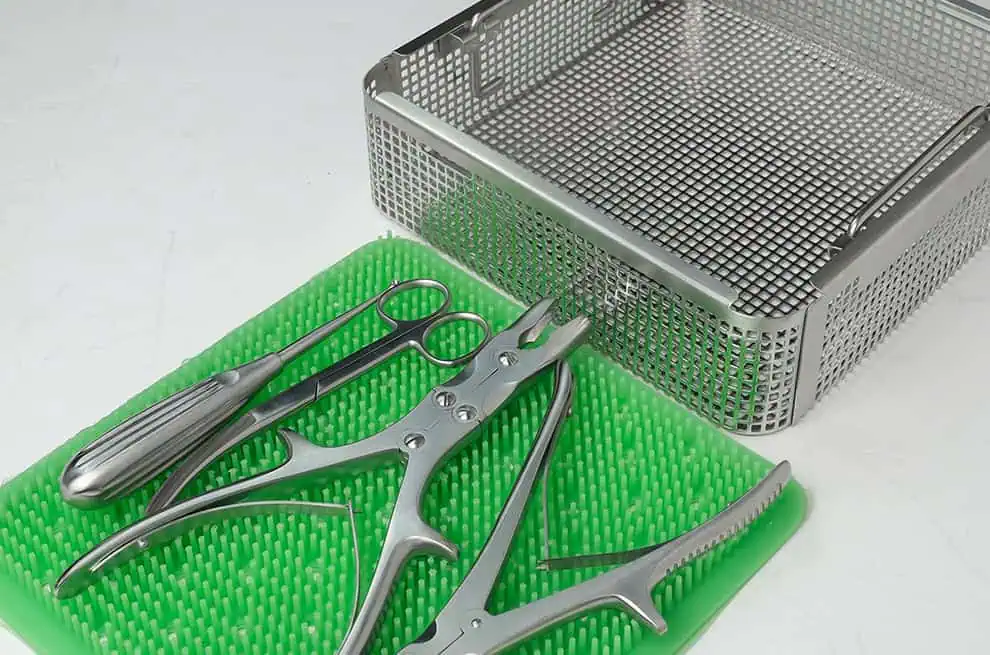
- Sterilization Containers: Place the instruments in suitable sterilization containers or wrap them in special materials such as sterilization paper or sealable pouches.
- Labelling: Include sterilization indicators that confirm the process has been successful.
Sterilization Methods
- Steam Sterilization (Autoclave):
- Process: Uses water vapour at high pressure and temperature to destroy microorganisms.
- Sterilization Cycle: Generally carried out at 121-134°C for 15-30 minutes, depending on the type and load of instruments.
- Advantages: Efficient, economical and safe for most instruments.
- Ethylene Oxide (EtO) Sterilization:
- Process: Uses ethylene oxide gas, suitable for heat- and moisture-sensitive materials.
- Time: The process can take several hours and requires a subsequent aeration period to remove gas residues.
- Advantages: Ideal for delicate instruments and plastic materials.
- Hydrogen Peroxide Sterilization (Hydrogen Peroxide Plasma):
- Process: Uses hydrogen peroxide vapour that is converted into plasma by an electromagnetic field.
- Time: Fast cycles, generally 45-75 minutes.
- Advantages: Effective at low temperatures and safe for heat-sensitive materials.
- Gamma Radiation Sterilization:
- Process: Uses ionising radiation to sterilize materials.
- Application: More common in industry for pre-sterilized products, less frequent in hospital settings.
- Dry Heat Sterilization:
- Process: Uses hot air to destroy microorganisms.
- Temperature and Time: Generally carried out at 160-170°C for 2-3 hours.
- Advantages: Effective for heat-resistant materials.
Validation and Storage
- Validation:
- Biological and Chemical Indicators: Indicators are used to confirm that sterilization conditions have been properly met.
- Storage:
- Conditions: Sterilized instruments should be stored in a clean, dry environment protected from contamination.
- Stock Rotation: Use the “first in, first out” (FIFO) principle so that instruments are used in the order in which they were sterilized.
Special Considerations
- Maintenance of Sterilization Equipment: Carry out regular maintenance of autoclaves and other sterilization equipment.
- Staff Training: Make sure staff are properly trained in sterilization techniques and instrument handling.
By following these steps and methods, healthcare facilities can ensure that surgical instruments are correctly sterilized and safe to use in medical procedures.