
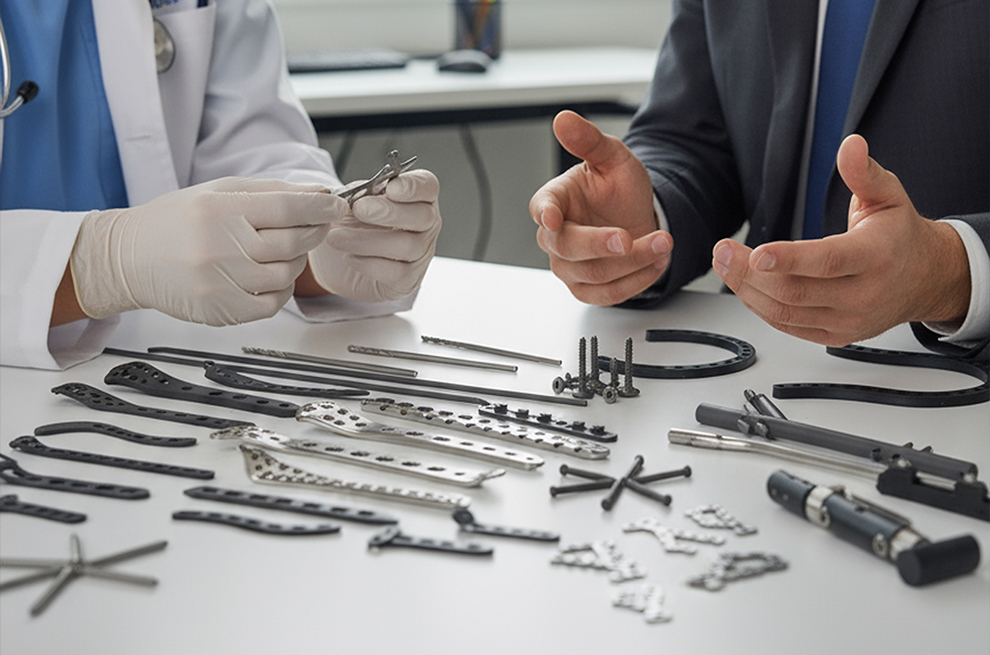
CE certification is one of the most critical regulatory requirements for medical device manufacturers who want to sell products in the European market. For companies operating in orthopedics and trauma implants, CE marking is not just a legal obligation — it is a global symbol of safety, quality, and compliance.
In this comprehensive guide, we explain what CE certification for medical devices means, how the process works, and why choosing a compliant orthopedic implants manufacturer is essential for long-term success.
What Is CE Certification?
CE (Conformité Européenne) marking indicates that a medical device complies with the European Union’s safety, health, and environmental protection standards.
For medical devices, CE certification is regulated under:
-
EU Medical Device Regulation (MDR 2017/745)
-
EU In Vitro Diagnostic Regulation (IVDR 2017/746)
CE marking allows manufacturers to legally sell their products in:
-
All EU member states
-
EEA countries
-
Many other countries recognizing EU standards
For trauma implants, joint prostheses, and surgical instruments, CE certification confirms that the device meets strict clinical and safety requirements.
Why CE Certification Is Critical for Orthopedic Implants
Orthopedic implants such as plates, screws, intramedullary nails, and prostheses are classified as high-risk medical devices (Class IIa, IIb, or III depending on indication).
This means:
-
Clinical evaluation is mandatory
-
Risk analysis must be documented
-
Biocompatibility testing is required
-
Mechanical performance must be validated
-
Sterilization validation is essential
When working with a certified trauma implant supplier, distributors and hospitals reduce regulatory risks and ensure patient safety.
Medical Device Classification Under MDR
Medical devices in the EU are classified into four main categories:
-
Class I (Low risk)
-
Class IIa (Medium risk)
-
Class IIb (Higher risk)
-
Class III (Highest risk)
Most orthopedic trauma implants fall into Class IIb or Class III, which require Notified Body assessment.
The higher the classification, the more rigorous the conformity assessment process.
CE Certification Process for Medical Devices
Obtaining CE certification involves several structured steps.
1. Quality Management System (QMS)
The manufacturer must implement ISO 13485-compliant quality management systems.
This includes:
-
Design controls
-
Risk management (ISO 14971)
-
Supplier qualification
-
Production validation
-
Traceability systems
Companies like Aysam Ortopedi ve Tıbbi Aletler operate under strict ISO 13485 frameworks to ensure regulatory compliance at every production stage.
2. Technical Documentation (Technical File)
The technical file must include:
-
Device description
-
Intended use
-
Risk analysis
-
Clinical evaluation report (CER)
-
Biocompatibility reports
-
Mechanical testing results
-
Sterilization validation
-
Labeling and IFU documentation
This documentation proves that the product is safe and performs as intended.
3. Clinical Evaluation
For orthopedic implants, clinical evaluation is mandatory.
Manufacturers must:
-
Conduct literature review
-
Analyze clinical data
-
Demonstrate equivalence or perform clinical investigation
-
Provide post-market clinical follow-up (PMCF) plan
Under MDR, clinical requirements are significantly stricter than previous MDD regulations.
4. Notified Body Audit
For Class IIa, IIb, and III devices, a Notified Body must:
-
Audit the manufacturing facility
-
Review technical documentation
-
Evaluate risk management systems
-
Assess clinical evidence
Once approved, the manufacturer receives CE certification and can affix the CE mark.
5. Post-Market Surveillance (PMS)
CE certification is not a one-time event.
Manufacturers must continuously:
-
Monitor product performance
-
Collect user feedback
-
Report adverse events
-
Maintain vigilance system
-
Conduct periodic safety update reports (PSUR)
This ensures long-term product safety and regulatory compliance.
CE Certification and Global Market Advantage
CE marking provides more than EU market access. It offers:
-
Increased international credibility
-
Easier registration in Middle East, Africa, and Asia
-
Higher distributor confidence
-
Stronger brand reputation
A certified orthopedic implants manufacturer with CE marking gains competitive advantage in global tenders and distributor agreements.
Common Challenges in CE Certification
Manufacturers often face challenges such as:
-
Complex MDR documentation
-
Increased clinical evidence requirements
-
Notified Body capacity limitations
-
Higher compliance costs
-
Ongoing regulatory updates
Working with an experienced and certified trauma implant supplier minimizes these risks for international partners.
Why CE Compliance Matters When Choosing a Supplier
If you are a distributor or hospital procurement manager, always verify:
-
Valid CE certificate
-
ISO 13485 certification
-
MDR compliance status
-
Device classification confirmation
-
Technical file availability
Reliable companies like Aysam Ortopedi ve Tıbbi Aletler maintain updated regulatory documentation and ensure full transparency with partners.
CE Certification at Aysam Ortopedi ve Tıbbi Aletler
As a globally active orthopedic implants manufacturer and trauma implant supplier, Aysam Ortopedi ve Tıbbi Aletler prioritizes:
-
ISO 13485 certified production
-
MDR-compliant technical documentation
-
Biocompatibility and mechanical validation
-
Continuous post-market surveillance
-
International regulatory support
Our commitment to CE certification reflects our dedication to patient safety, surgical precision, and global quality standards.
Final Thoughts
CE certification for medical devices is more than a regulatory requirement — it is a guarantee of safety, performance, and international credibility.
When selecting an orthopedic implants manufacturer or trauma implant supplier, CE compliance should be a non-negotiable criterion.
Choosing a CE-certified partner ensures:
-
Regulatory security
-
Market access
-
Patient safety
-
Long-term business growth
In today’s competitive medical device industry, compliance is not optional — it is the foundation of sustainable success.
