
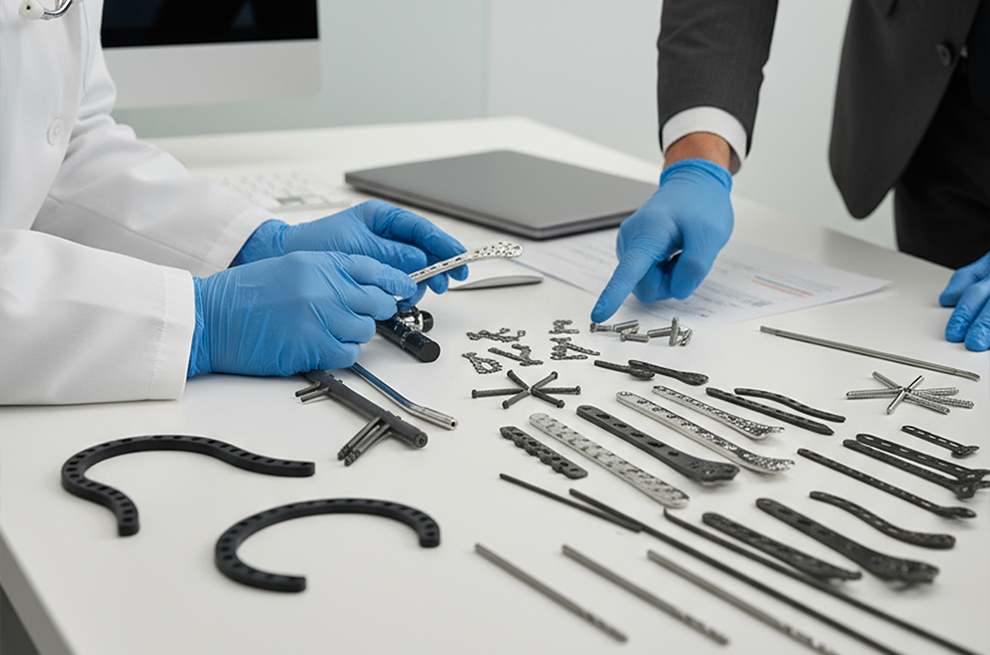
Choosing the right material for orthopedic implants is one of the most critical decisions in trauma and reconstructive surgery. The two most commonly used materials in orthopedic applications are titanium alloys and stainless steel (316LVM).
For distributors, surgeons, and procurement managers, understanding the differences between titanium and stainless steel implants is essential when selecting a reliable orthopedic implants manufacturer or trauma implant supplier.
In this comprehensive guide, we compare titanium vs stainless steel implants in terms of strength, biocompatibility, corrosion resistance, imaging compatibility, and cost.
1. Overview of Implant Materials
Titanium Implants
Titanium alloys, especially Ti-6Al-4V ELI, are widely used in:
- Trauma plates
- Locking screws
- Intramedullary nails
- Spinal implants
- Joint prostheses
Titanium is known for being lightweight, highly biocompatible, and corrosion-resistant.
Stainless Steel Implants
Medical-grade stainless steel (316LVM) is commonly used in:
- Bone plates
- Cortical screws
- Kirschner wires
- External fixation systems
Stainless steel offers high strength and cost efficiency, making it a popular choice in trauma applications.
2. Mechanical Strength Comparison
Strength & Load Bearing
Both titanium and stainless steel provide excellent mechanical strength. However:
- Stainless steel generally has higher tensile strength.
- Titanium has lower modulus of elasticity (closer to natural bone).
Why This Matters
Titanium’s lower modulus reduces stress shielding, which helps maintain bone density over time. This is especially important in long-term implants.
Stainless steel, on the other hand, is very rigid and strong, making it suitable for high-load trauma situations.
3. Biocompatibility & Patient Safety
Biocompatibility is critical for long-term implantation.
Titanium
- Excellent biocompatibility
- Forms natural oxide layer
- Lower risk of allergic reactions
- Superior osseointegration
Stainless Steel
- Good biocompatibility
- Contains nickel (may trigger allergies in sensitive patients)
- Slightly higher corrosion risk compared to titanium
For long-term implants such as joint replacements, titanium is often preferred due to its superior tissue compatibility.
4. Corrosion Resistance
Titanium naturally forms a stable oxide layer that protects against corrosion, especially in bodily fluids.
Stainless steel is also corrosion-resistant but may be more susceptible in aggressive environments over extended periods.
Reliable manufacturers such as Aysam Ortopedi ve Tıbbi Aletler conduct rigorous corrosion and biocompatibility testing to ensure long-term implant performance.
5. Imaging Compatibility (MRI & X-ray)
Titanium offers significant advantages in medical imaging:
- Less interference with MRI
- Reduced imaging artifacts
- Better post-operative evaluation
Stainless steel may cause more imaging distortion due to its magnetic properties.
For surgeons who rely heavily on follow-up imaging, titanium implants provide clearer diagnostic results.
6. Weight & Patient Comfort
Titanium is approximately 40–45% lighter than stainless steel.
Advantages of lighter implants:
- Improved patient comfort
- Reduced overall implant mass
- Potentially improved rehabilitation outcomes
In high-volume trauma systems, weight may not always be the primary factor, but for large constructs, it becomes relevant.
7. Cost Considerations
One of the main differences between titanium vs stainless steel implants is cost.
- Titanium implants are generally more expensive due to raw material and machining complexity.
- Stainless steel implants are more cost-effective and widely accessible.
Hospitals often balance cost vs performance depending on:
- Healthcare budget
- Implant duration (temporary vs permanent)
- Clinical indication
A trusted trauma implant supplier should offer both material options to meet diverse market needs.
8. Clinical Applications Comparison
Titanium Preferred For:
- Long-term implantation
- Joint replacement systems
- Patients with metal sensitivities
- Situations requiring superior osseointegration
Stainless Steel Preferred For:
- Temporary fixation
- Cost-sensitive markets
- High-rigidity requirements
- External fixation systems
9. Manufacturing & Quality Standards
Regardless of material, quality depends heavily on manufacturing precision.
Key quality factors include:
- Raw material certification
- Mechanical strength validation
- Fatigue testing
- Surface finishing processes
- Sterilization validation
- CE and ISO compliance
An experienced orthopedic implants manufacturer ensures that both titanium and stainless steel implants meet international regulatory standards.
Companies like Aysam Ortopedi ve Tıbbi Aletler integrate advanced CNC machining and strict quality control systems to guarantee consistent implant performance.
Titanium vs Stainless Steel: Quick Comparison Table
| Feature | Titanium | Stainless Steel |
| Weight | Lighter | Heavier |
| Strength | High | Very High |
| Elasticity | Closer to bone | More rigid |
| Corrosion Resistance | Excellent | Very Good |
| MRI Compatibility | Superior | Moderate |
| Cost | Higher | Lower |
| Biocompatibility | Excellent | Good |
Which One Is Better?
There is no universal “best” material. The correct choice depends on:
- Clinical indication
- Implant duration
- Patient sensitivity
- Budget considerations
- Surgeon preference
For permanent implants and advanced orthopedic procedures, titanium often provides superior long-term outcomes.
For temporary fixation and cost-effective trauma solutions, stainless steel remains a strong and reliable option.
Material Excellence at Aysam Ortopedi ve Tıbbi Aletler
As a globally recognized orthopedic implants manufacturer and trauma implant supplier, Aysam Ortopedi ve Tıbbi Aletler offers both titanium and stainless steel implant solutions manufactured under strict ISO 13485 and CE-compliant systems.
Our production focuses on:
- Certified medical-grade raw materials
- Advanced machining technology
- Precision surface treatment
- Comprehensive mechanical validation
- International export standards
Final Thoughts
Understanding the differences between titanium vs stainless steel implants helps surgeons and distributors make informed, patient-focused decisions.
When selecting an orthopedic implants manufacturer, ensure:
- Material transparency
- Regulatory compliance
- Mechanical validation
- Proven manufacturing expertise
Both titanium and stainless steel have strong roles in modern orthopedics. The key is partnering with a reliable trauma implant supplier that guarantees quality, safety, and clinical performance.
