


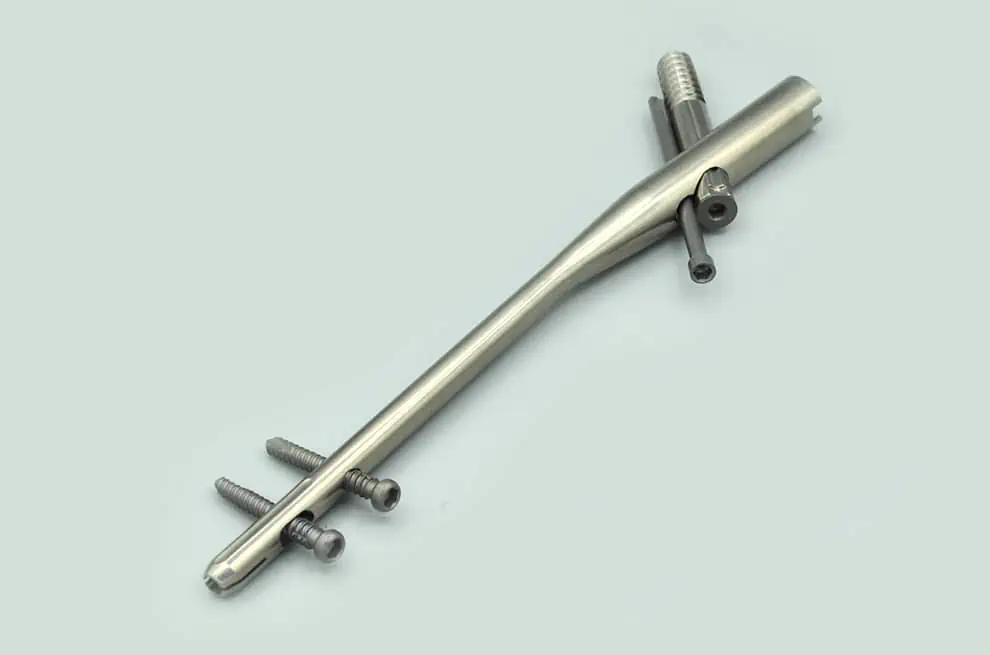
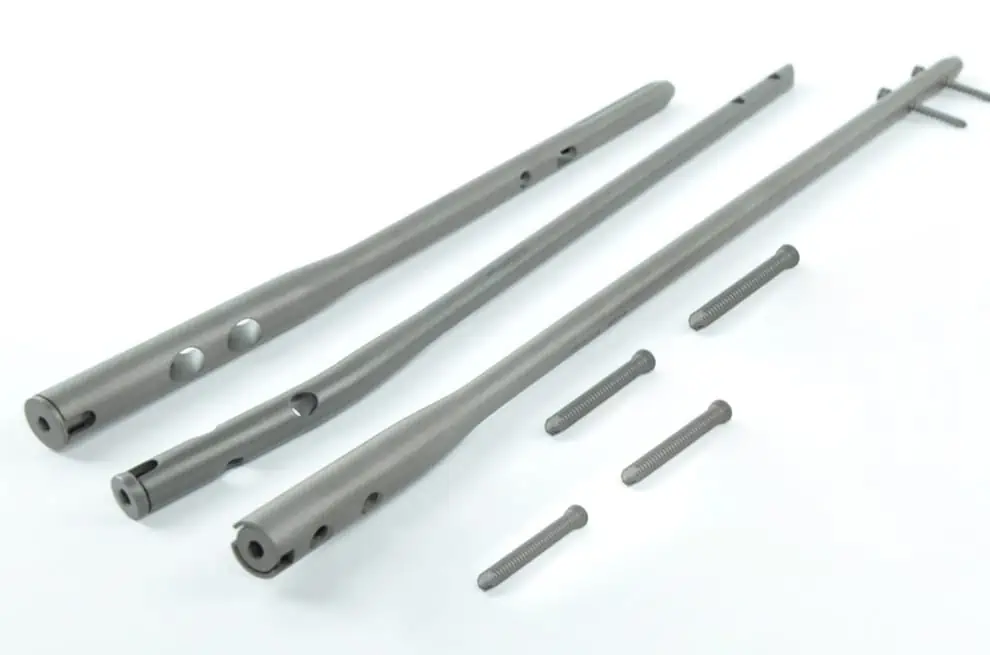

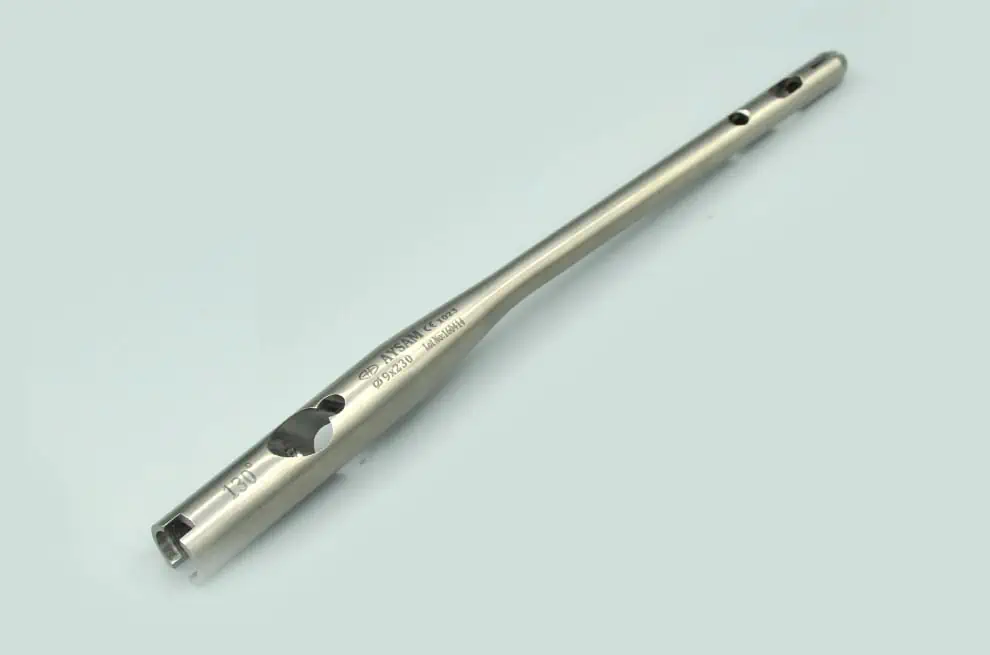

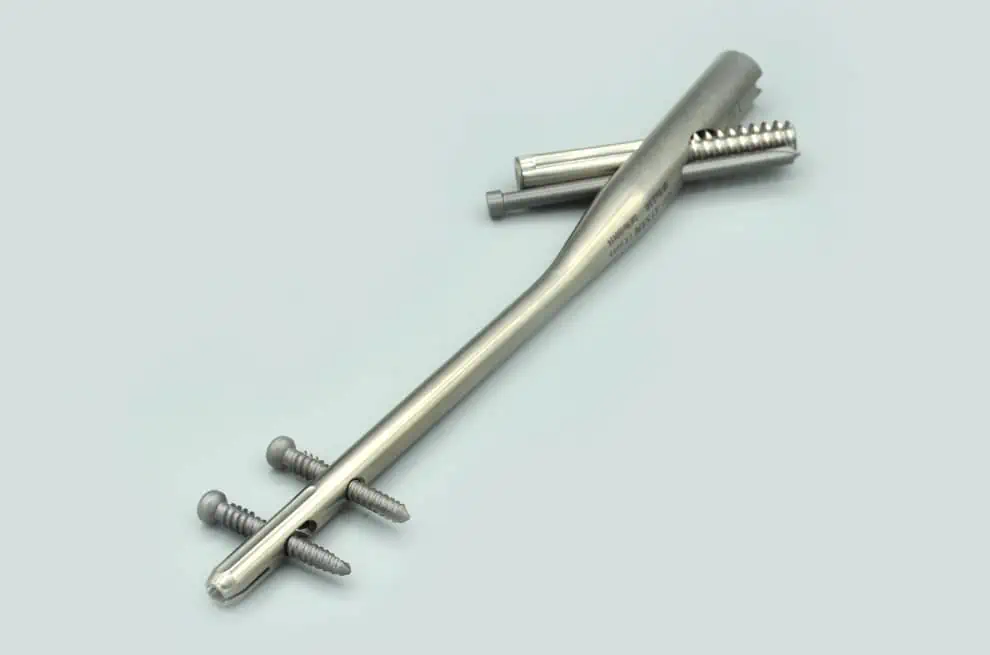
Removal of an intramedullary nail from the femur is a surgical procedure performed under anaesthesia. It is usually carried out when the fracture has fully healed and the nail is no longer needed, or when there are complications related to the implant. The exact technique may vary depending on the type of nail inserted and the patient’s specific circumstances. Below is a general outline of the process for removing an intramedullary femoral nail:
Preparation
- Preoperative Assessment: The patient is assessed to make sure they are fit for surgery. This includes laboratory tests, assessment of bone union and, where appropriate, updated imaging of the femur.
- Anaesthesia: General or regional (spinal) anaesthesia is given so that the patient feels no pain during the procedure.
- Positioning: The patient is usually placed supine (lying on their back) on the operating table, and the surgical area is prepared according to strict aseptic standards to reduce the risk of infection.
Surgical Procedure
- Access: An incision is made over the nail’s entry site, usually in the proximal or distal region of the femur, depending on the position of the end of the nail.
- Removal of the End Cap or Closure Material: If an end cap or closure material was placed at the ends of the nail to prevent bone tissue from growing into it, it is removed.
- Locating and Freeing the Nail: The end of the nail is located. Sometimes scar tissue or bone that has grown over the nail must be removed to expose it fully.
- Nail Extraction: Using special instruments, such as a nail extractor that fits into the hole at the end of the nail, the surgeon applies traction and rotational force to free the nail and pull it out of the medullary canal. This step can be difficult if the nail is firmly fixed in the bone or if ossification has occurred around it.
- Inspection of the Medullary Canal: Once the nail has been removed, the surgeon may inspect the medullary canal to make sure there is no debris or bone fragments.
- Closure: The incision is closed in layers with sutures or staples, as appropriate.
Postoperative Care
- Recovery: The patient is taken to a recovery room and monitored while recovering from the anaesthesia.
- Pain Management: Painkillers are prescribed to manage postoperative pain.
- Rehabilitation: A rehabilitation programme may be needed to regain full strength and mobility.
Considerations
The decision to remove an intramedullary nail should be made carefully, weighing the risks and benefits of the procedure. Removal is more complicated and risky in patients with osteoporosis or infection, or when the nail has been in place for a long time.
It is important to follow all postoperative instructions and attend follow-up appointments with the surgeon to ensure proper recovery.